
Running a Sex Offender Check in Monroe County
The New York State Division of Criminal Justice Services maintains the official New York State Sex Offender Registry under Correction Law Article 6-C. Its public directory principally shows Level 2 and Level 3 registrants. A court assigns the level after a hearing, based on a recommendation from the Board of Examiners of Sex Offenders. Level 1 information follows a more limited telephone verification process and does not appear in the same way as the full online profiles.
Prepare a name, Monroe County location, or ZIP code before searching. Spelling matters. A geographic result reflects registered information allowed by statute, not real-time surveillance. For a move across state lines or a search that extends beyond New York, add the national registry layer. Contact law enforcement for an urgent safety issue rather than treating a directory result as an emergency-reporting channel.
Level 1 Monroe Registry Records
A blank online result does not cover every person registered in Monroe County. New York limits Level 1 public access to its statutory telephone route, while Level 2 and Level 3 records receive broader online publication and community notification. The difference turns on the court’s risk classification, not merely on how long ago the conviction occurred.
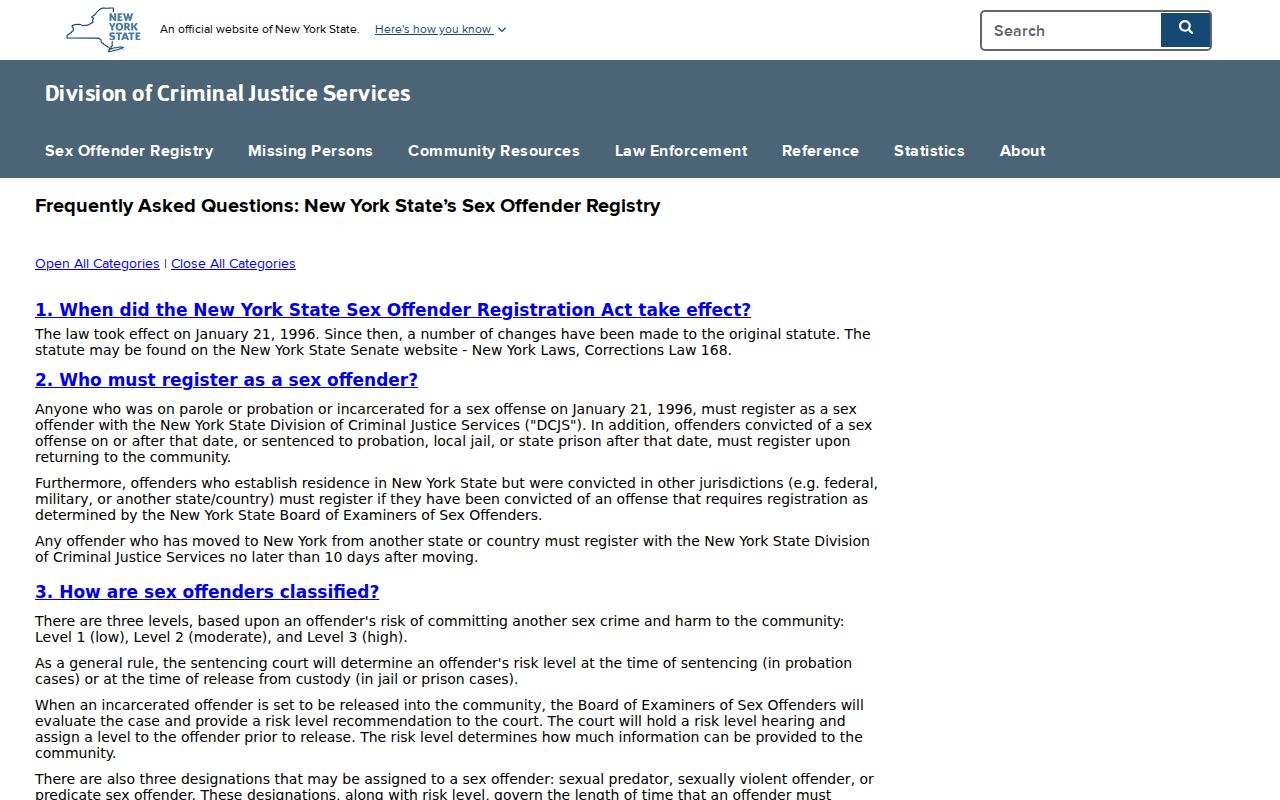
The DCJS registry FAQ explains these public-access levels and their general duration rules.
When identity is uncertain, use the statutory DCJS service instead of drawing a conclusion from a name alone. Similar names, address changes, and restricted publication can all affect what appears.
This distinction also prevents a common Monroe County search error. Risk level controls the public channel, while the underlying court file controls the conviction record. A Level 1 telephone verification is not a reduced version of a Level 2 or Level 3 profile, and failure to find a full online page does not alter the registration duty.
Note: A missing full profile may reflect New York’s Level 1 access rules and is not proof that no registration exists.
Searching the New York State Sex Offender Registry
DCJS provides the official state search. Start broadly enough to catch a spelling variation, then narrow to Monroe County or a ZIP code. Review the result list before opening a profile, and compare more than one field. A name match by itself is not enough to identify a person.
- Open the New York State Sex Offender Registry search and read its use conditions.
- Choose a name route or enter Monroe County or ZIP information for a geographic search.
- Review the public Level 2 and Level 3 result list, accounting for spelling and possible aliases.
- Open the matching profile and compare the photograph, physical description, risk level, offense, and registered-location fields.
| Field Label | Type | Required | Notes |
|---|---|---|---|
| Last name | Text | Route dependent | Name search; spelling matters |
| First name | Text | Route dependent | Used with the selected name route |
| County | Dropdown | No | Select Monroe for county filtering |
| ZIP code | Text | No | Geographic search input |
| Search or Clear | Buttons | Not applicable | Run or reset the query |
The official DCJS registry search image shows the government source assigned to Monroe County checks.
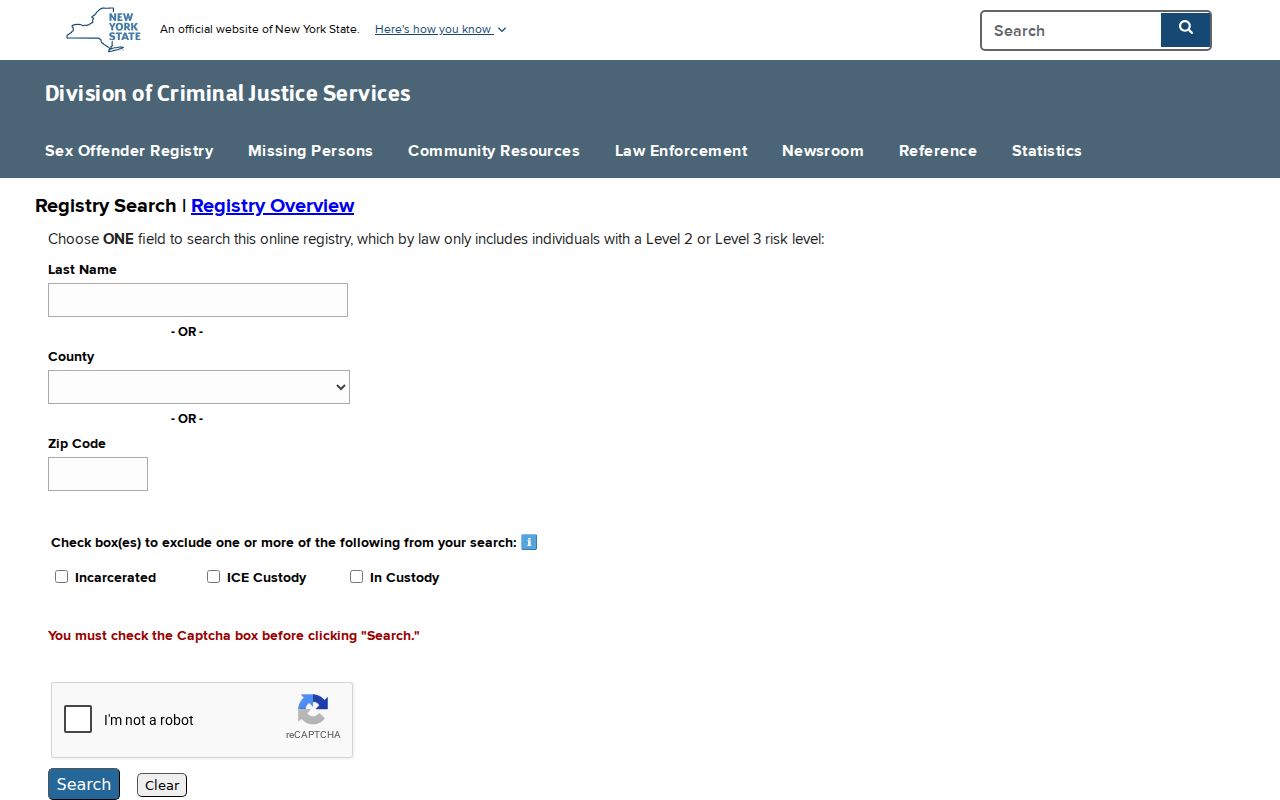
Search controls can change, so the live DCJS form controls if its labels differ from this field inventory.
Read Monroe County Registry Data
Registered address information is a reported legal data point, not a live location signal. A person can move, report a change, or have information update after a processing interval. Risk level also has a narrow meaning: it estimates New York’s assessed risk of repeat offense for registry purposes. It does not predict present conduct, and it is not the same as a federal SORNA tier.
Confirm that several identifiers line up before relying on a Monroe County registry result. Photograph, age, physical traits, aliases, offense, and location can distinguish people with similar names. If a profile appears wrong, use the registry’s official correction or contact route. Suspected failure to comply should go to law enforcement. Do not confront a listed person or household.
What a Registry Profile Shows
A New York public profile can contain identity, physical, risk, conviction, and registration facts, but DCJS does not promise every possible field on every Monroe County entry. Publication depends on the risk level and what the statute authorizes. The profile is also not a full list of arrests, dismissed allegations, court filings, or non-registry convictions.
| Name & Aliases | Legal name and alternate names supplied in the public record. |
|---|---|
| Photo & Description | Current available photograph, age or birth data, race, height, weight, hair, eyes, and marks. |
| Registered Location | Address or location details published to the extent New York law permits. |
| Offense Information | Conviction and offense details tied to the duty to register. |
| Risk Level | Level 1, 2, or 3 assigned by a New York court after a hearing. |
| Status Fields | Designation, registration jurisdiction, and available compliance information. |
Note: Vehicle, school, work, victim-category, and compliance fields appear only when New York law authorizes them and data is available.
NSOPW Extends Monroe Registry Searches
The DCJS directory is the primary source for New York records. The U.S. Department of Justice National Sex Offender Public Website, or NSOPW, adds a cross-state layer. It searches participating state, territorial, and tribal public registries and routes readers back to the source jurisdiction. That helps when a person may have moved into or out of Monroe County.
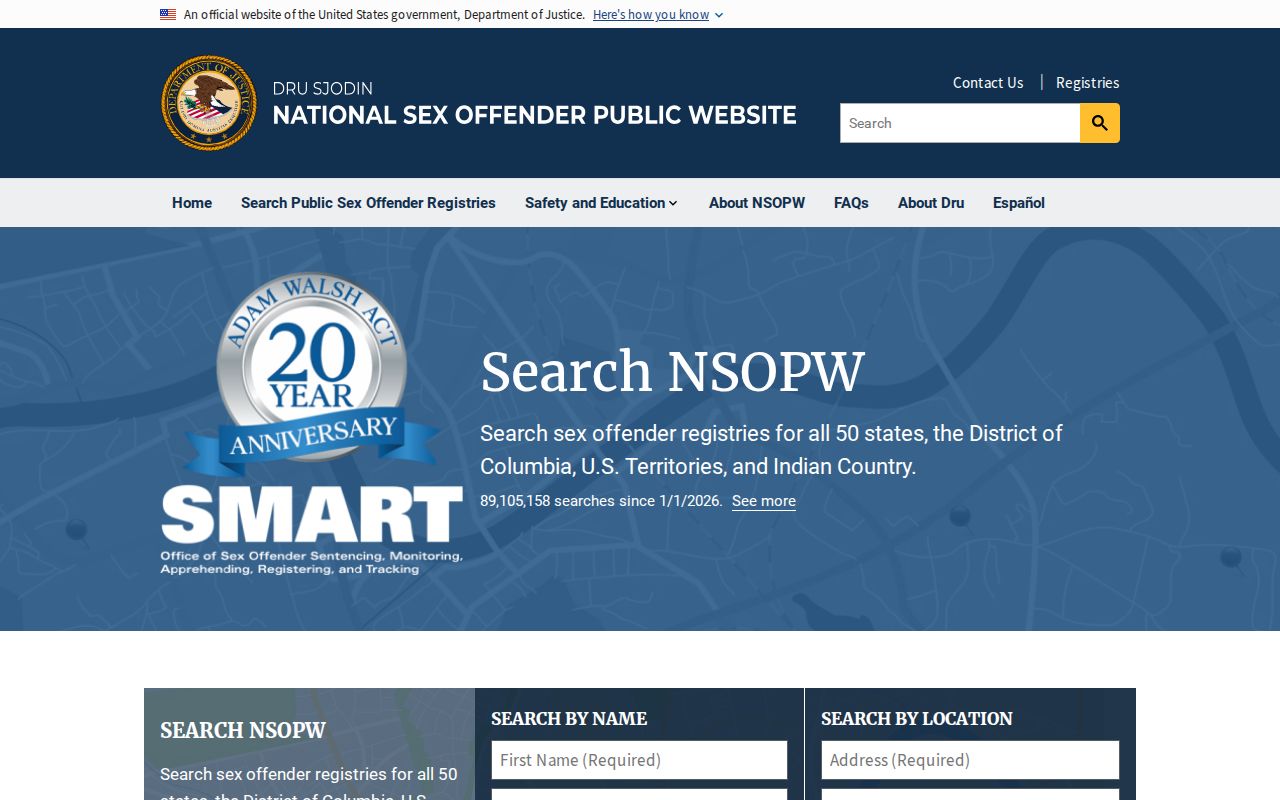
NSOPW does not replace DCJS or turn each state’s rules into one national standard. Search coverage and displayed fields still depend on the contributing jurisdiction. For a Monroe County match, check the linked New York profile for the state’s current record and use local law enforcement for suspected noncompliance.
Note: NSOPW broadens geography, but the linked state record remains the source for Monroe County registration details.
Registration Requirements and Levels in New York
New York’s three levels describe risk, not offense severity alone and not federal tiers. Level 1 is low risk, Level 2 is moderate risk, and Level 3 is high risk. General duration is 20 years for Level 1 unless a special or lifetime designation applies. Levels 2 and 3 generally register for life, although statute-specific modification procedures can matter. Correction Law sections 168-h and 168-o and the current DCJS FAQ control an individual case.
| Risk Level | General Public Channel | Duration Principle |
|---|---|---|
| Level 1, low risk | Limited telephone verification, not the full directory | Generally 20 years unless a lifetime rule applies |
| Level 2, moderate risk | Public online directory and authorized notification | Generally life; modification law may apply |
| Level 3, high risk | Public online directory and broad notification | Life |
The registry level is assigned at a court hearing after the Board of Examiners makes a recommendation. It should not be inferred from a charge name or from the public detail visible on a profile.
Monroe Registry Is Not Criminal History
A Monroe County registry listing serves a specific notice function. It does not stand in for OCA CHRS, WebCrims, a certificate of disposition, or one’s own fingerprint-based DCJS rap sheet. Registry information may show the qualifying conviction and risk status, but it does not provide every court event or a full statewide arrest cycle. Keep the inquiry matched to the record type.
New York sealing law also has distinct limits. The official Clean Slate statute, CPL 160.57, governs automatic sealing of eligible convictions after its conditions and waiting periods are met.
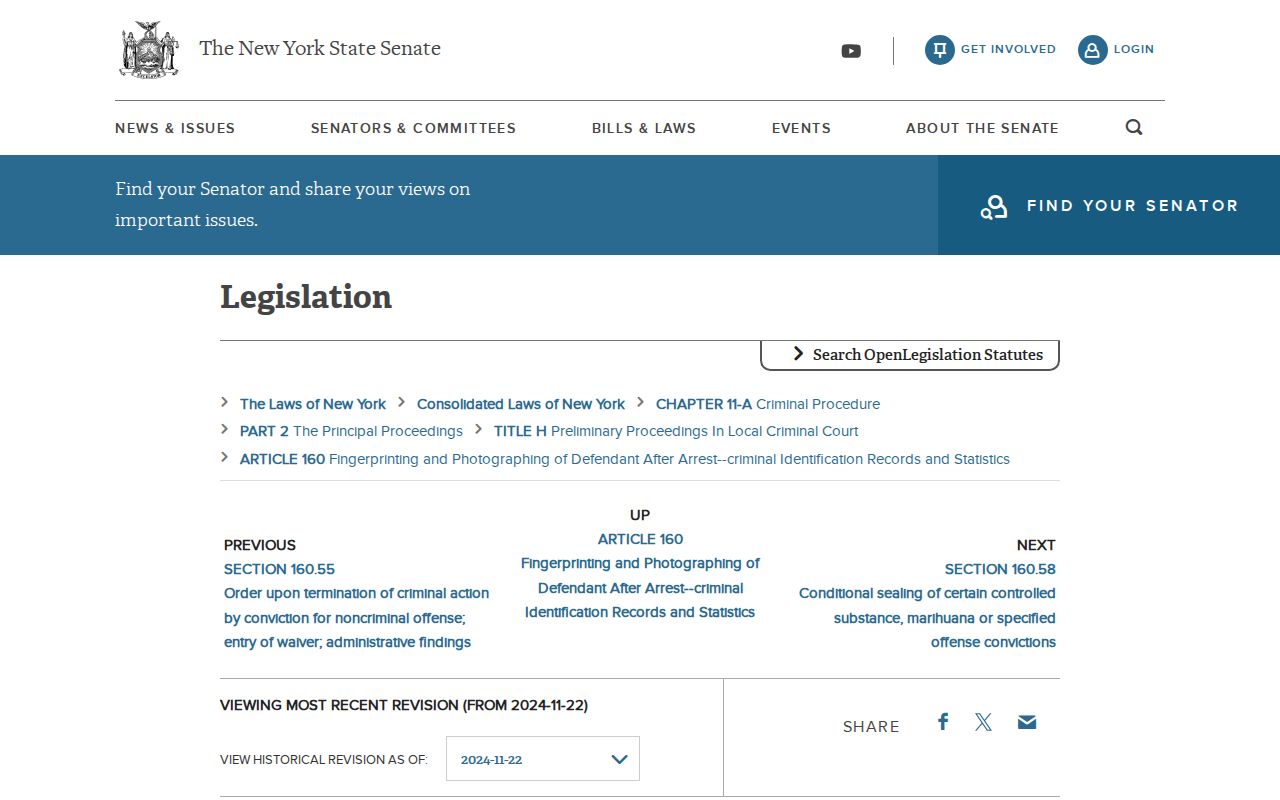
That law does not justify assuming a registry duty has ended or that a public profile should vanish. Most sex offenses are excluded from other common sealing routes, and registry obligations turn on Correction Law and the governing court orders.
For the same reason, a sealed case search and a registry check can yield different public results without either system being defective. Each system applies its own statute, custodian, access rules, and purpose.
Report Monroe County Registry Concerns
DCJS maintains the statewide directory, while local law enforcement handles immediate public-safety concerns and investigates suspected failure to comply. No official source reviewed gave stable Monroe County registration-counter hours or an appointment schedule, so none should be inferred. The Monroe County Sheriff’s Office headquarters is at 130 South Plymouth Avenue in Rochester, with the main county-listed number 585-753-4178.
Monroe County Sheriff
130 South Plymouth Avenue
Rochester, NY 14614
585-753-4178
Call ahead for the correct registration or compliance unit.
Call 911 for an active emergency. For a data problem, begin with the DCJS registry contact process and give enough detail to identify the profile. For suspected noncompliance, report facts rather than making direct contact. A registry address can lag or change, and an online discrepancy requires official review.
Lawful Use and Community Notification
New York’s community-notification system lets the public use authorized Level 2 and Level 3 information for awareness and safety planning. Correction Law §168-l controls risk-level determinations and public dissemination. The limited Level 1 process and the broader Level 2 and Level 3 directory are deliberate parts of that system. Respect those boundaries and verify a profile through DCJS before acting on it.
Misuse is a crime: New York registry information may not be used to injure, harass, threaten, or commit a crime against a registrant or any other person under Correction Law §168-l.
Use Monroe County sex offender check results for calm personal, family, and community safety choices. Do not publish copied profiles, organize vigilantism, or treat an address as permission to trespass or confront someone. Contact police about urgent conduct and the official custodian about a record concern.